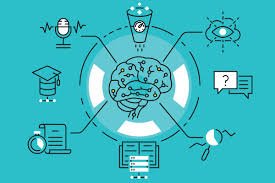
Machine learning has become a buzzword in the world of technology, and for good reason. It has the potential to revolutionize the way we live and work, by enabling computer systems to automatically learn from data and improve their performance over time. But what exactly is machine learning, and how does it work? In this article, we will demystify the concept of machine learning and explain some of the key concepts and techniques involved.
At a high level, machine learning is a subfield of artificial intelligence that involves the development of algorithms and statistical models that can learn from data and make predictions or decisions based on that data. The goal is to create computer systems that can perform tasks that would normally require human intelligence, such as recognizing images, translating languages, or playing games.
One of the most common types of machine learning algorithms is supervised learning. In supervised learning, the computer system is trained on labeled data, which means that the data has been manually annotated or tagged by humans. For example, in a facial recognition system, the computer might be trained on a dataset of thousands of labeled images of faces, where each image is labeled with the name of the person in the image. The algorithm learns to recognize patterns in the data, and can then be used to make predictions on new, unlabeled data.
Another type of machine learning is unsupervised learning, where the computer system is trained on unlabeled data. In this case, the goal is to find patterns and structures in the data without any prior knowledge or supervision. For example, in a clustering algorithm, the computer might be trained on a dataset of customer purchase histories, and the algorithm would group similar customers together based on their purchase behavior.
Reinforcement learning is another type of machine learning, which involves training a computer system to make decisions based on rewards or penalties. The algorithm learns to take actions that maximize the reward signal, while avoiding actions that lead to penalties. This type of learning is often used in robotics or game playing, where the system needs to learn to navigate an environment and achieve a specific goal.
Before training a machine learning algorithm, it’s often necessary to extract relevant features from the raw data. This involves transforming the data into a format that can be easily processed by the algorithm, while preserving the important information. Feature extraction is a crucial step in the machine learning pipeline, and can greatly affect the performance of the algorithm.
Once a machine learning algorithm has been trained, it’s important to evaluate its performance on new, unseen data. This is typically done by splitting the dataset into training and testing sets, and measuring the algorithm’s accuracy or other metrics on the testing set. Overfitting and underfitting are common problems in machine learning, where the algorithm either becomes too complex and fits the training data too well (overfitting), or is too simple and fails to capture the underlying patterns in the data (underfitting). Balancing the complexity of the model and the size of the dataset is crucial for avoiding these issues.
In conclusion, machine learning is a powerful tool that has the potential to transform many fields, from healthcare and finance to transportation and entertainment. Understanding the basics of machine learning, including supervised learning, unsupervised learning, reinforcement learning, feature extraction, and model evaluation, is essential for anyone interested in working with these algorithms. As the field of machine learning continues to evolve and grow, it’s important to stay up-to-date with the latest techniques and best practices.

 news hot